Gate-based Quantum Computing vs Quantum Annealing
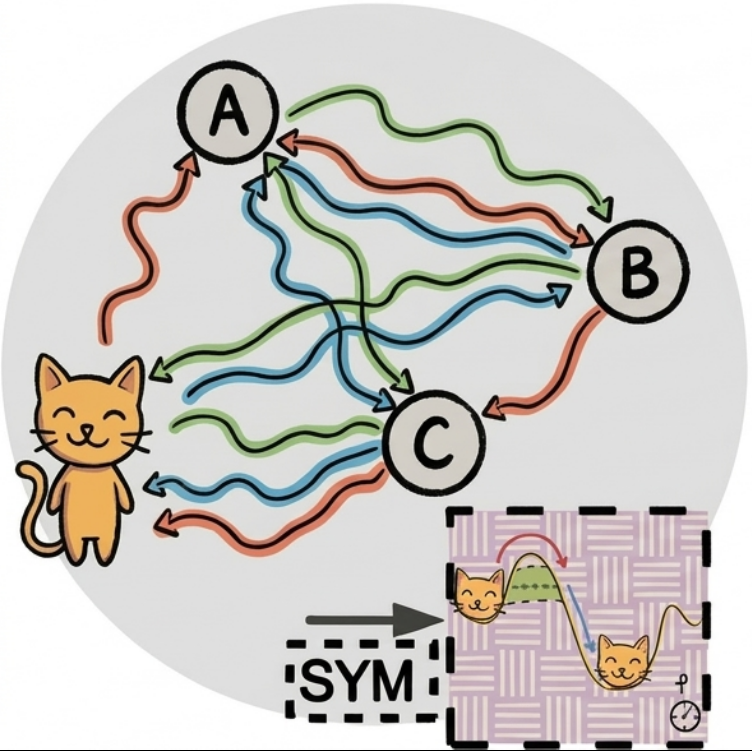
There are different possibilities to realize quantum computing. One possibility is gate-based quantum computing and the other quantum annealing. Here, we explain both approaches and highlight how their differences determine which types of problems each can solve effectively. For companies exploring real-world quantum applications, understanding this distinction is often the first step toward choosing the right hardware platform.
Both methods use principles of quantum mechanics such as quantum superposition and entanglement. For example, quantum bits – or qubits for short – can exist in multiple states at once due to superposition.
This post is part of the QUICS project, which is a collaboration of the GWDG, LUH, and the PTB. QUICS provides low-threshold access for SMEs to test use cases on different quantum hardware and software.
Gate-based Quantum Computing
Let us first consider gate-based quantum computing. Here, quantum gates are applied sequentially to a set of qubits in discrete time steps. The problem is encoded, and the computation is executed using these gates, similar to classical computers.
There are multiple universal gate sets, e.g., the set containing the Toffoli gate and the Hadamard gate.1 One can build arbitrary gates by combining gates from one of these universal sets. This leads to flexibility in algorithm design and thus to universal quantum computation. Gate-based quantum computing can therefore be used in various fields such as quantum chemistry, machine learning, financial engineering, optimization problems, and decryption.
Despite the promise of a wide application field, there are still challenges to overcome before applying this approach to real-world problems. Gate-based quantum computing is sensitive to decoherence and different types of errors, e.g. gate errors. To overcome this, quantum error correction is used, which requires anywhere between 10 to over a thousand physical qubits per logical qubit. This is why the gate-based quantum devices of the current era are known as Noisy Intermediate-Scale Quantum, or NISQ, devices.
In the QUICS project, it is possible to use gate-based quantum simulators on GWDG’s HPC environment. You can inspect our current simulators here.
Quantum Annealing
As we saw in the previous section, gate-based quantum computing is highly versatile and can be applied in a wide variety of fields. Quantum annealing, on the other hand, is a metaheuristic primarily used to solve optimization problems. Similar to its classical counterpart, one encodes the problem into the energy levels of a physical system and then allows the system to settle into the global minimum energy state to find the solution.2 In this process, energy barriers are overcome via quantum tunneling, which makes the search for the global minimum more efficient. This process is depicted in Figure 1, adapted from Tripathi et al.:3

The qubit states are manipulated according to a time-dependent Hamiltonian $H(t)$:
$$H(t) = \left(1 - \frac{t}{T} \right)H_I + \frac{t}{T}H_P\, \text{.}$$The quantum system evolves from an initial Hamiltonian $H_I$ to the problem Hamiltonian $H_P$, whose ground state corresponds to the solution of the problem. The ground state of $H_I$ is typically easy to prepare. $T$ is the total evolution time of the system from the initial to the final state, and $t$ is any time between $0$ and $T$. This transition uses the adiabatic theorem: if the evolution is slow enough, the system remains in the ground state. Then the probability of ending in the ground state of $H_P$ is close to 1. The problem is typically encoded as a so-called QUBO (quadratic unconstrained binary optimization) problem, which is equivalent to an Ising Hamiltonian.
On D-Waves quantum annealing processors, the quantum processing unit is a physical realization of an undirected graph, where the qubits are the vertices and the couplers are the edges between the qubits. A coupler is a device or circuit that controls the interactions between the qubits. Embedding the problem graph onto the hardware graph can introduce overhead and is therefore an important issue in quantum annealing research. Typical hardware graph structures used in quantum annealing are the Chimera or Pegasus graph. Feld et al. provide a visualization of a Chimera graph:4

Comparing both structures
The advantage of quantum annealing is that it is more robust against errors such as noise and decoherence compared to gate-based quantum computing. Furthermore, quantum annealing currently offers significantly more qubits for calculations. State-of-the-art hardware can provide more than a thousand logical qubits for optimization tasks. However, quantum annealing has a much narrower application area than gate-based quantum computing because it does not allow for the creation of arbitrary algorithms. Currently, quantum annealing is mainly applied to optimization problems, machine learning, and physical simulations. Nevertheless, there is ongoing research on creating methods for universal quantum computing on quantum annealing machines, e.g. by Imoto et al.1. Due to the comparatively small number of available qubits, gate-based quantum computing is currently restricted to down-sampled or toy problems. Ultimately, choosing between these two frameworks means deciding whether your problem demands the flexibility of programmable quantum circuits or the specialization of energy-based optimization.
T. Imoto, Y. Susa, R. Miyazaki and Y. Matsuzaki, “Universal quantum computation using quantum annealing with the transverse-field Ising Hamiltonian,” arXiv [Preprint], 2025. ↩︎ ↩︎
Z. Kaseb, M. Moller, P. Palensky and P. P. Vergara, “Performance Comparison of Gate-Based and Adiabatic Quantum Computing for Power Flow Analysis,” arXiv [Preprint], 2025. ↩︎
R. Tripathi, S. Tomar and S. Kumar, “A Comprehensive Survey on Quantum Annealing: Applications, Challenges, and Future Research Directions,” TechRxiv [Preprint], 2025. ↩︎
S. Feld, C. Roch, T. Gabor, C. Seidel, F. Neukart, I. Galter, W. Mauerer, C. Linnhoff-Popien, “A Hybrid Solution Method for the Capacitated Vehicle Routing Problem Using a Quantum Annealer,” Frontiers in ICT, 2019. ↩︎
Table of Contents